

Deep Price Drops Predicted to Challenge Vietnam’s Rice Exports in 2025
In 2024, Vietnam’s rice exports achieved a record high, reaffirming its position among the top three rice-exporting countries globally. According to the Ministry of Agriculture and Rural Development, Vietnam exported 9.18 million tons of rice, earning $5.75 billion, a 13% increase in volume and a 23% rise in value compared to 2023. The average export price of rice reached $627 per ton, up 9%, thanks to improved quality and the benefits of free trade agreements. Vietnamese rice products are now available in over 150 countries and territories.
Vietnam remained the third-largest rice supplier to Singapore in 2024, with an export turnover of SGD 128.9 million, accounting for 28.25% of the market share. Sticky and fragrant rice varieties saw significant growth, helping Vietnam become Singapore’s top rice export partner in the first half of the year. However, increasing competition from India and Thailand led to a slight decline in total export turnover to Singapore, highlighting the need for innovation to maintain market dominance.
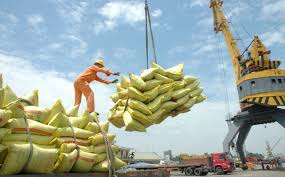
Vietnam’s rice exports in 2024 set a record high with 9.18 million tons.
Forecasts for 2025 suggest that Vietnam’s rice export industry will face numerous challenges. Declining demand and competition from other producing nations, particularly as India relaxes restrictions on rice exports, are expected to put downward pressure on prices. Vietnam’s rice export prices have already fallen to their lowest level in over two years, which could further reduce export revenue next year.
According to Tran Thanh Hai, Deputy Director of the Import-Export Department at the Ministry of Industry and Trade, the potential for growth in rice exports in 2025 is limited. To overcome these difficulties, businesses must maintain product quality while exploring new potential markets. Collaborating with professional forwarder companies and optimizing international shipping logistics services will be crucial components of their development strategies.
International shipping and logistics services play a vital role in the supply chain. Rice-exporting businesses should leverage export entrustment and import entrustment services to minimize costs and mitigate risks in international trade. These solutions allow companies to focus on improving their products and building robust brand identities.
Additionally, entrusted import-export services help small and medium-sized enterprises reduce the administrative burden, enabling them to concentrate on core operations. Support from professional forwarder companies ensures smooth maritime shipping processes, enhancing competitiveness in international markets. These factors are key to helping Vietnamese rice maintain its strong position in the coming years.
To enhance its standing in the global market, businesses need to invest in systematic product promotion activities. Cao Xuan Thang from the Vietnam Trade Office in Singapore emphasized that the promotion of Vietnamese rice brands remains limited. Large-scale trade promotion programs can help Vietnamese rice capture international attention, expand market share, and mitigate the impact of competition.
Despite the challenges forecasted for 2025, opportunities remain for businesses that effectively utilize logistics and import-export services. With the right strategies, support from forwarder companies, and a focus on improving product quality, Vietnam can continue to solidify its position as one of the world’s leading rice-exporting nations.




