

Durian Exports: What Are the Competitors Doing?
The durian freight market is experiencing positive price fluctuations due to supply shortages following the end of the harvest season in the Central Highlands. Transport companies report that RI6 durians are priced between VND 145,000 to 165,000 per kilogram, while premium Thai durians can reach up to VND 175,000 per kilogram. International shipping services are shifting focus from the Central Highlands to the Mekong Delta to source off-season durians, though production still falls short of market demand.
In the first 10 months of the year, fruit and vegetable export-import services achieved an impressive $6.4 billion, with durian accounting for nearly half at $3 billion. Freight forwarders are concentrating on the Chinese market, especially after the signing of a protocol for frozen durian exports. Sea freight services are expected to boost frozen durian export revenue to $400-500 million this year.
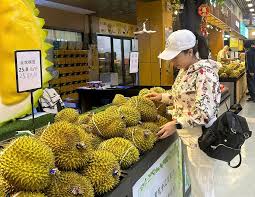
Durian from Krông Pắk District, Đắk Lắk Province
However, international shipping services face intense competition from regional players. Transport companies from Thailand and Malaysia hold a competitive edge in the Chinese market due to their consistent product quality and effective marketing strategies. Vietnam’s logistics sector must improve to ensure consistent quality and compliance with phytosanitary regulations.
Regarding China’s domestic market, the development of durian-growing areas in Hainan could impact future export-import services. However, experts believe that due to geological and climatic limitations, China will still rely heavily on imports. This opens up opportunities for Vietnamese container shipping companies to continue expanding in the market.
To enhance competitiveness, Vietnamese logistics companies should focus on providing cost-effective shipping services while maintaining high quality. Additionally, they need to intensify trade promotion efforts and organize regular marketing events in China, learning from Thailand and Malaysia’s success in hosting periodic fruit festivals.
With forecasts suggesting that fruit and vegetable export revenue could surpass $7 billion this year, transport companies need to be well-prepared in terms of both domestic and international container shipping capacity. Optimizing sea freight costs and improving service quality will be key factors for Vietnam’s logistics sector to compete effectively on the global stage.




