

The United States Initiates Double Investigation on Imported Corrosion-Resistant Steel from Vietnam
The U.S. Department of Commerce (DOC) has officially initiated anti-dumping and countervailing investigations into corrosion-resistant steel (CORE) imported from Vietnam. This move presents new challenges for Vietnam’s steel export industry and related logistics services.
According to the Trade Defense Department (Ministry of Industry and Trade), the products under investigation include CORE steel under HS codes 7210.30, 7210.41, 7210.49, 7210.61, 7210.69, 7210.70, 7210.90, 7212.20, 7212.30, 7212.40, 7212.50, 7212.60, and 7226.99. Vietnam is among the 10 countries being investigated, accounting for up to 75% of the total import value into the United States in 2023.
During the period from 2021 to 2023, the export value of CORE steel from Vietnam to the U.S. reached USD 626 million, USD 751 million, and USD 242 million, respectively, ranking third among the countries under investigation. This highlights the importance of the U.S. market for Vietnam’s steel export sector and the role of logistics in transporting this large volume of goods.
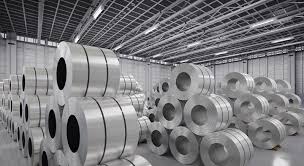
The United States Initiates Double Investigation on Imported Corrosion-Resistant Steel from Vietnam
The anti-dumping investigation period is set for the first half of 2024, while the countervailing investigation focuses on 2023. The DOC is expected to announce preliminary conclusions on November 29, 2024, for the countervailing investigation and on February 12, 2025, for the anti-dumping investigation. These timelines create urgent demands for exporting companies and logistics service providers to prepare documentation and adjust business strategies.
Notably, the alleged dumping margin for Vietnam is 195.23%, the highest among the 10 investigated countries. This could put significant pressure on product pricing and logistics costs, requiring companies to optimize their supply chains and transportation processes to maintain competitiveness.
In response to this situation, the Trade Defense Department recommends that manufacturers and exporters of CORE steel closely monitor the developments of the case and familiarize themselves with the regulations and investigation procedures of the U.S. Diversifying export markets and products is also an important strategy to mitigate risks. Additionally, companies need to fully cooperate with U.S. investigators and proactively register for an IA ACCESS account to receive updates and submit relevant documents.
For the logistics industry, this investigation poses many challenges but also creates new opportunities. The demand for optimizing supply chains and reducing transportation costs will increase, requiring logistics companies to enhance operational efficiency. Developing integrated logistics solutions that support exporters in managing inventory and distributing products flexibly is a necessary trend.
Furthermore, strengthening the capacity to handle customs procedures and export documentation to meet the stringent requirements of the investigation is crucial. Logistics companies also need to invest in technology for tracking and tracing goods, assisting exporters in proving product origin.
In summary, the DOC’s investigation into Vietnam’s CORE steel presents significant challenges for the export and logistics sectors. However, it also provides an opportunity for Vietnamese businesses to enhance competitiveness, optimize production and transportation processes, and expand their markets. Close cooperation between manufacturers, exporters, and logistics service providers will be key to overcoming these challenges and maintaining market position in the United States.




