

Bilateral Trade Between Vietnam and China Nears $150 Billion
According to the latest data from the General Department of Customs, trade activities between Vietnam and China continued to experience robust growth in the first nine months of 2024, creating both opportunities and challenges for the logistics industries of both countries.
In September 2024, Vietnam’s imports from China reached a turnover of $12.24 billion. Over the first nine months, this figure totaled $104.8 billion, an increase of 32.2% compared to the same period last year. Notably, 15 import categories from China reached a turnover of $1 billion or more. This growth has placed high demands on the transportation and warehousing capacities of logistics companies, particularly in the road and sea transport sectors.
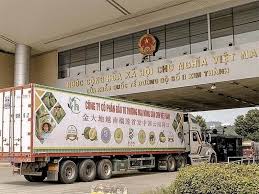
Durian is a Key Export to China
In terms of exports, Vietnam exported $44.4 billion worth of goods to China in the nine-month period, a slight increase of 2.94% year-on-year. There were 10 export categories with turnovers of $1 billion or more, with phones and components leading the way at $10.86 billion. This demonstrates a growing demand for specialized logistics services for high-tech goods.
The total import-export turnover between Vietnam and China in the first nine months reached $149.2 billion, with a trade deficit of $60.4 billion for Vietnam. This imbalance presents a challenge for the logistics industry in optimizing container and transportation vehicle use, ensuring cost efficiency for both directions of trade.
Dr. Le Quoc Phuong, former Deputy Director of the Industry and Trade Information Center (Ministry of Industry and Trade), observed that Vietnam’s imports from China mainly consist of raw materials for production and export. This offers opportunities for logistics companies to develop integrated supply chain management services, effectively connecting suppliers, manufacturers, and consumption markets.
The geographical proximity between the two countries facilitates bilateral transportation, requiring the logistics sector to further develop multimodal transportation services, particularly combining road and sea routes. This not only helps optimize costs but also meets the need for fast and flexible transport services for businesses.
In summary, the strong growth in Vietnam-China trade is creating both opportunities and challenges for the logistics industry. Capturing this trend and investing in the right areas will help logistics companies not only meet current demands but also position themselves as a crucial link in the global value chain, contributing to the sustainable development of the economy.




